An inspection can help after a leak, wind event, repeated repair, home purchase, or when an aging roof needs a maintenance plan. Tell us what prompted the request so the review answers the actual decision instead of becoming a generic checklist.
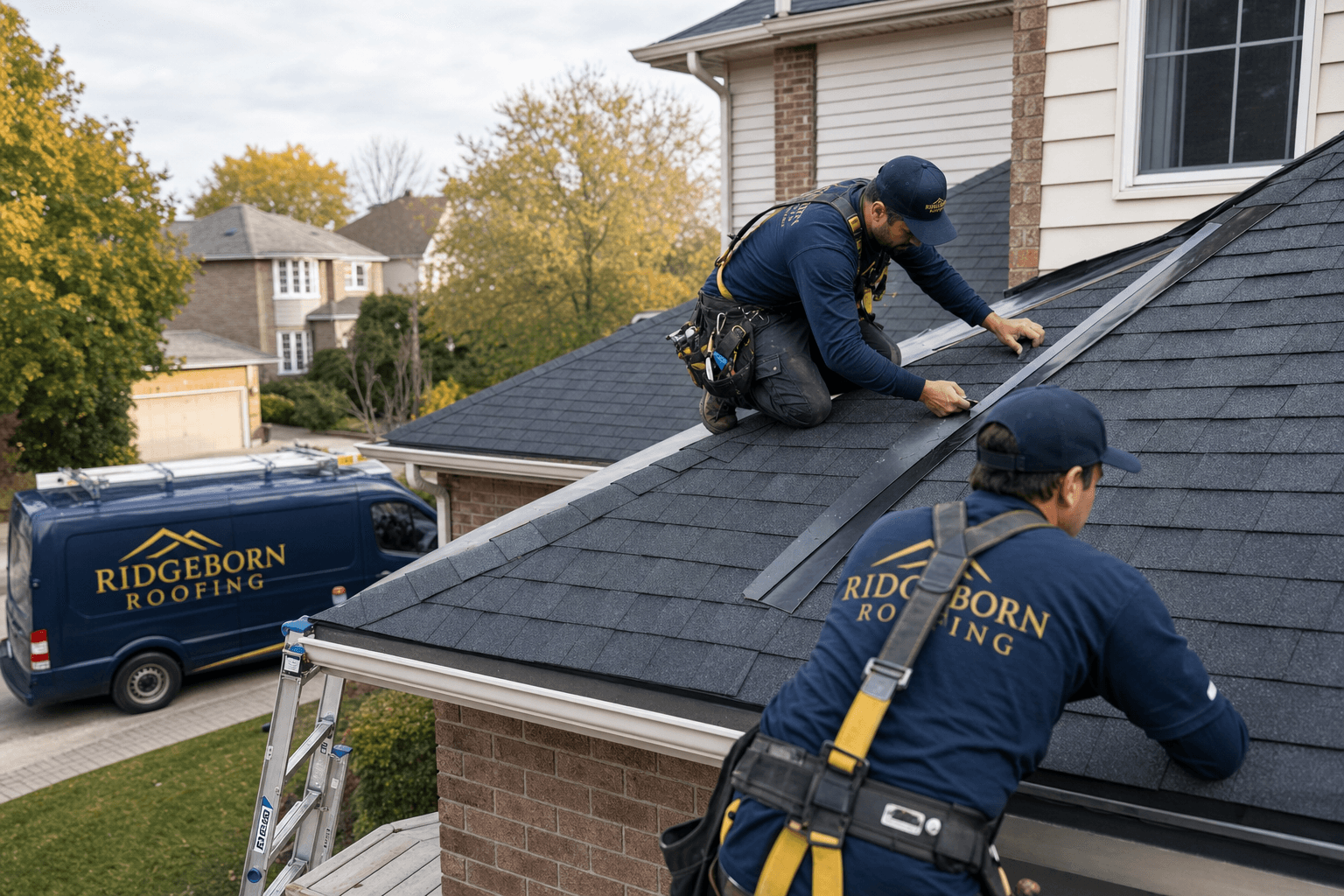
Where access is safe, we review visible shingles or membrane condition, ridge and edge details, valleys, flashing, vents, pipe boots, skylights, chimneys, parapets, drains, scuppers, eavestroughs, and signs of previous repair. Roof type and geometry determine which details apply.
The indoor stain may not sit directly below the entry point. Weather direction, roof transitions, flashing, drainage, attic evidence, and the history of the leak help narrow the likely source. Some leaks require observation during rain or a more specialized investigation before the cause can be confirmed.
When accessible and relevant, the review can include visible attic staining, wet insulation, frost or condensation clues, daylight, and ventilation layout. We also look at how water leaves the roof because blocked or poorly directed drainage can imitate a roofing failure or make one worse.
A standard roofing inspection is visual and non-destructive. It cannot confirm concealed decking, trapped moisture, structural capacity, code compliance, or the condition below intact materials. We identify access limits and recommend a qualified specialist when the question falls outside a roofer’s visible-condition assessment.
The next step should connect the observed condition to a defined scope: monitor, maintain, repair, investigate further, or plan replacement. Photos, affected components, urgency, access assumptions, and possible hidden conditions make the recommendation easier to compare with another roofing opinion.