A useful first call includes the property address, roof type if known, where the damage is visible, whether water is entering now, and whether it followed wind or rain. Photos of the ceiling stain and the roof from a safe ground-level position can help us prepare. The indoor stain may be some distance from the exterior opening.
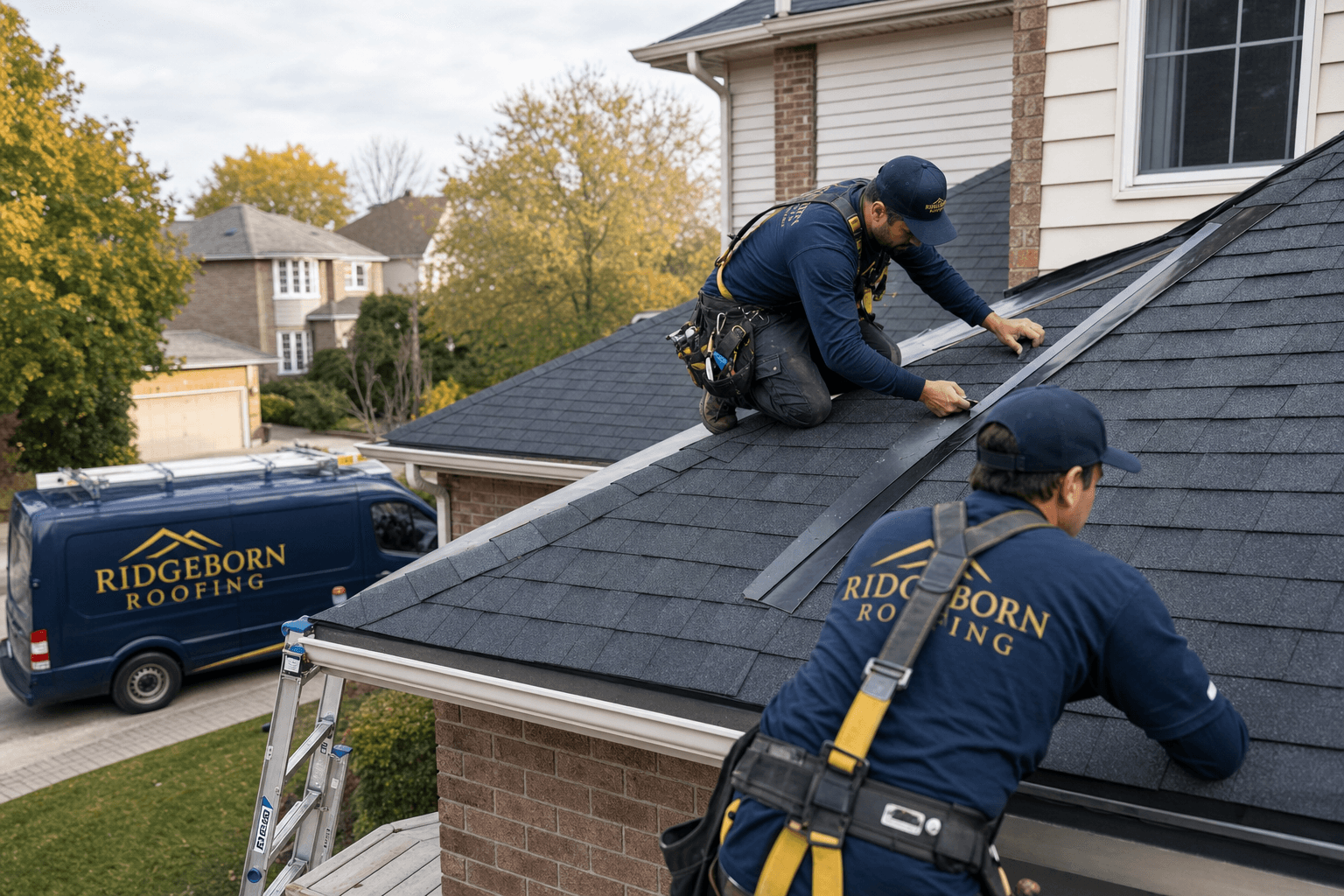
We look at the displaced or cracked shingles, nearby tabs, ridge and roof edges, exposed fasteners, and the condition of the surface beneath. A localized repair can make sense when surrounding material is sound and new material can be integrated. Widespread brittle or lifting shingles may change that recommendation.
Chimneys, sidewalls, skylights, plumbing stacks, and vents interrupt the roof covering. We check how the flashing, boot, or vent ties into the shingles or membrane, rather than relying on surface sealant alone. Masonry, window, or siding defects can also send water to a roof-adjacent stain and may require a different trade.
Strong winds can loosen roof edges and lift materials unevenly. A fallen branch or windblown debris can damage a separate area from the obvious missing shingle. We record visible conditions and look at adjacent materials before setting the repair area. The National Roofing Contractors Association advises homeowners not to climb onto a potentially damaged roof to inspect it.
Protect people and belongings below the leak, keep clear of wet electrical fixtures and sagging ceilings, and call. A temporary cover may limit further water entry when weather and access allow, but it is not the finished repair. We separate stabilization from the investigation and permanent work so the scope stays clear.
The review follows the likely water path: roof covering, seams or shingle courses, flashing, valleys, vents, drainage, edges, and accessible attic evidence where relevant. The proposal should identify the area to open or repair, materials to be tied back in, any uncertainty about concealed damage, access and safety needs, and cleanup.
A targeted fix is less persuasive when the surrounding roof is failing, the same area has leaked repeatedly, or the deck and adjoining materials are damaged. We explain which finding drives that judgment, then compare a limited repair, further investigation, or replacement. A roof does not need replacing merely because one component failed.
Ask for the observed condition, the materials and area repaired, and any follow-up after the next comparable rain or wind event. If storm damage may involve insurance, photograph the visible damage safely and check your own policy and insurer instructions; coverage is decided by the insurer, not a roofing contractor.