Water can move along roof decking, rafters, insulation, pipes, and framing before it becomes visible. We start with where and when the water appeared, which weather direction was involved, whether the mark changes during rain or thaw, and what repairs have already been attempted. When access is available and relevant, interior or attic evidence can help connect the visible stain to a roof transition, penetration, valley, edge, or drainage route. A single dry-weather visit may narrow the cause without proving it, so the scope should state what was observed and what remains uncertain.
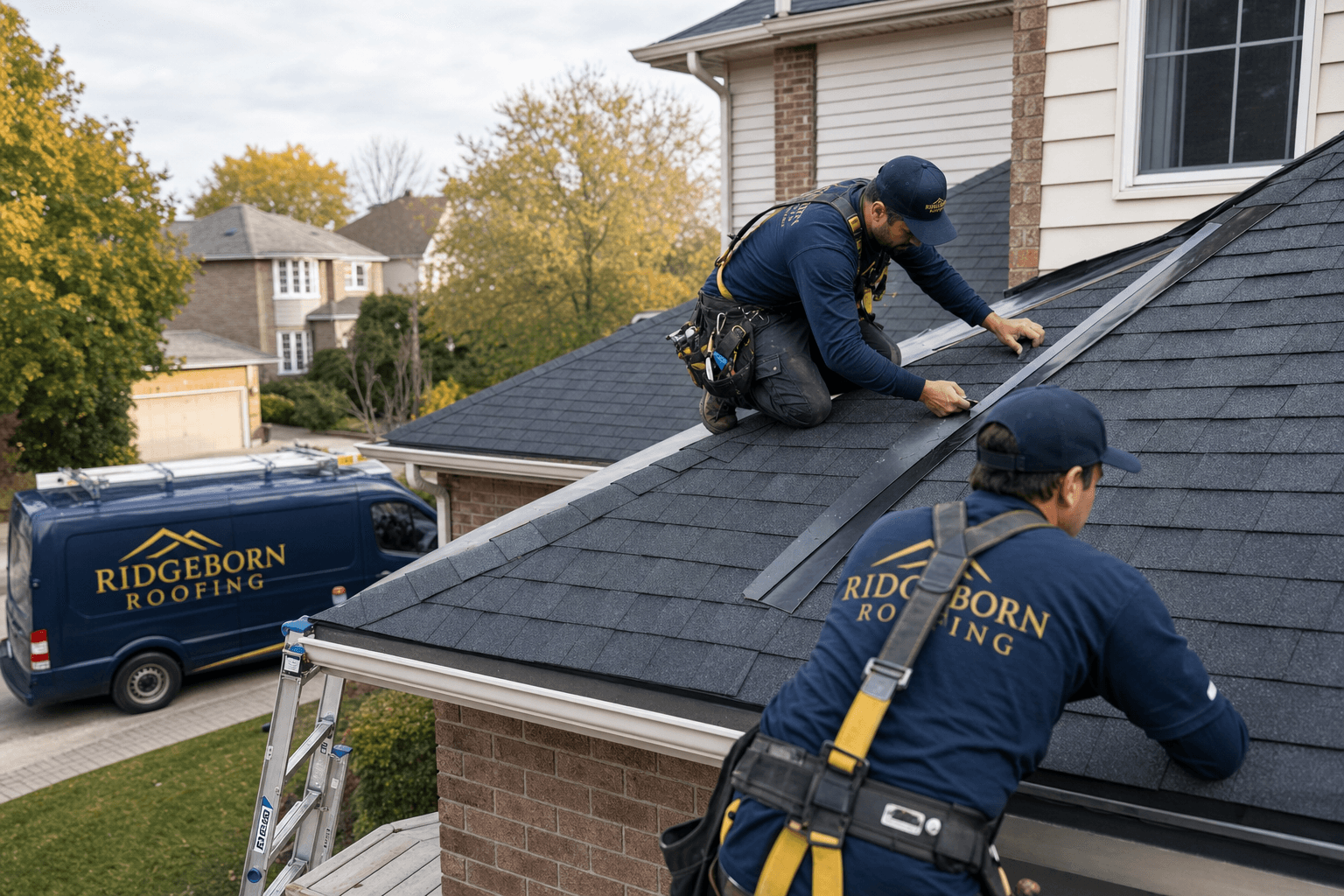
On a shingle roof, the field shingles are only one part of the water-shedding system. We check missing, creased, lifted, or poorly fastened shingles along with step flashing, chimney flashing, valleys, ridge and hip caps, vents, pipe boots, skylights, dormers, roof-wall intersections, eaves, and previous patches. Wind-driven rain can expose a weak transition that looks dry in calm weather. The repair should address the failed detail and any damaged surrounding material instead of relying on a surface bead of sealant as a universal fix.
Flat and low-slope roofs can hold or move water beneath the visible surface before it reaches the interior. The assessment may include membrane seams, patches, penetrations, parapet and edge flashing, drains, scuppers, rooftop equipment curbs, and areas where water ponds. The compatible repair method depends on the membrane type, surface condition, moisture extent, and whether the surrounding assembly remains serviceable. A localized open seam can be a different job from widespread membrane wear or a drainage problem affecting the whole roof.
Condensation, attic frost, plumbing, mechanical equipment, and poorly directed ventilation can create moisture that resembles a roof leak. Timing helps: a mark that appears only during wind-driven rain suggests a different path than moisture that develops during a winter cold snap or while an appliance is running. We flag visible clues that do not fit a roofing failure and recommend the appropriate qualified trade when the evidence points outside the roof covering. That distinction can prevent an unnecessary roofing patch that leaves the real source untouched.
If water is entering now, move valuables, collect drips where it is safe, and keep people away from sagging ceilings, wet electrical fixtures, or damaged materials. Do not climb onto a wet, icy, steep, or wind-damaged roof. Weather, darkness, access, roof pitch, and material requirements determine whether a crew can inspect, install temporary protection, or complete a permanent repair. Temporary tarping or another make-safe measure can reduce exposure, but it is not a substitute for repairing the failed roof component.
A limited flashing failure, damaged vent, open seam, missing shingle area, or isolated valley problem may support a targeted repair when the adjacent roof is still serviceable. Repeated leaks in different areas, widespread membrane or shingle deterioration, soft decking, multiple failing transitions, or an assembly near the end of its useful life can make another patch poor value. We separate the immediate water-entry problem from broader roof condition so the quote can explain what the repair addresses, what it does not address, and when replacement planning deserves consideration.
Before work, the scope should identify the suspected or confirmed source, the affected roof component, access assumptions, proposed materials, temporary work if any, and possible concealed conditions. After the repair, keep photos, the work description, and the date with the property records. Watch the area through the next relevant rain or thaw and report any continued moisture promptly. The City of Toronto’s property standards state that building roofs must be maintained in good condition, weatherproof, free of leaks, and free of loose or unsafe materials.