A low-profile attic vent, ridge vent, plumbing-stack boot, bathroom or kitchen exhaust cap, turbine, and flat-roof penetration do different jobs and fail in different ways. Tell us whether the problem is a ceiling stain, dripping after wind-driven rain, frost or dampness in the attic, a loose cap, animal damage, or a vent that was changed during other work. We identify the component before defining the repair because a leaking roof opening and an under-ventilated attic are related possibilities, not the same diagnosis.
Water may enter through a split plastic housing, a deteriorated rubber boot, an open seam, a displaced cap, exposed or backed-out fasteners, failed sealant, damaged shingles, or flashing installed out of sequence. It can also enter upslope and travel along underlayment or decking until it appears beside the vent. The review follows the visible water path and checks the surrounding roof surface rather than assuming that coating the vent edge will solve every stain below it.
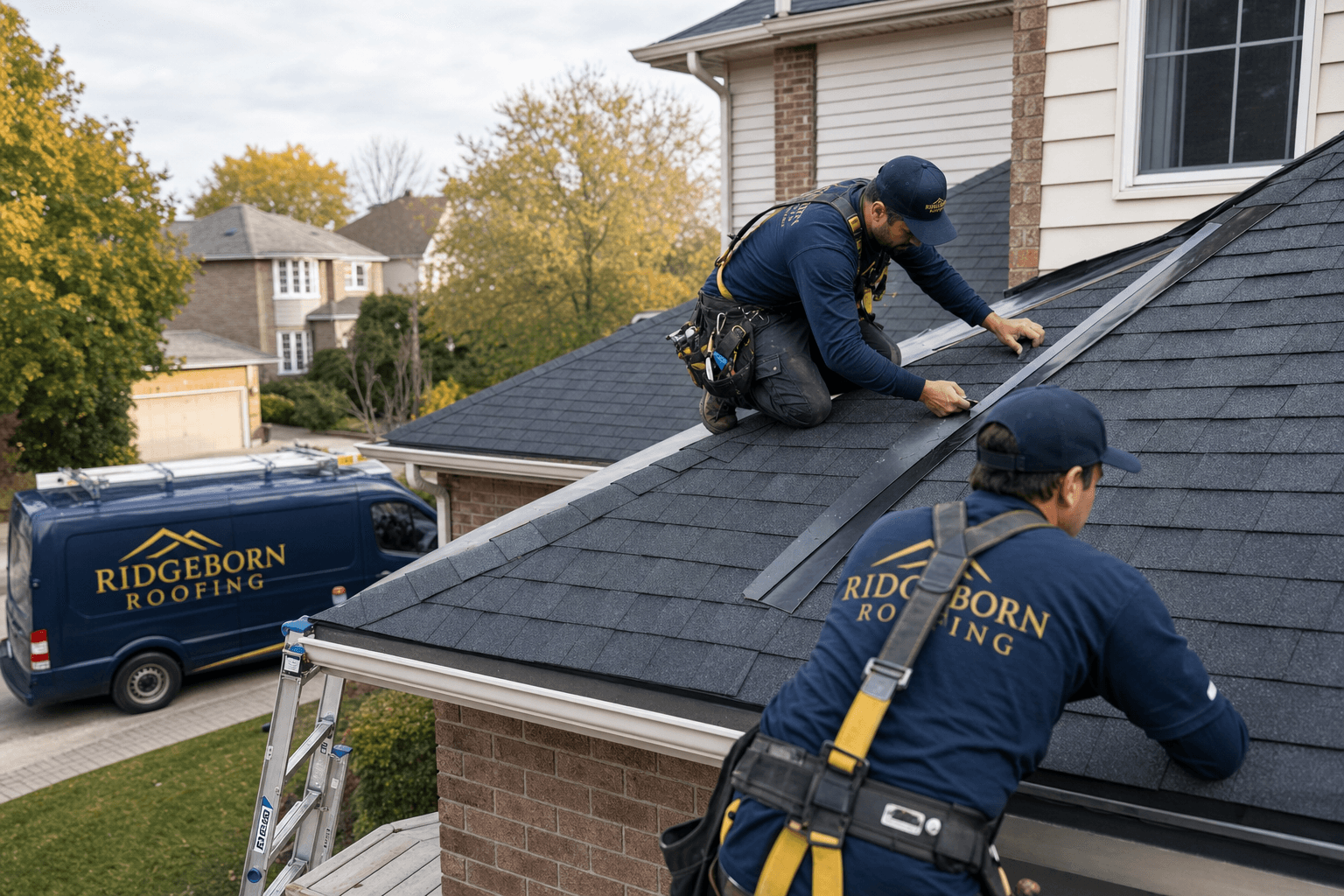
On a shingle roof, the vent flange normally has to work with the shingles and underlayment so water sheds over each layer. A repair may require removing nearby shingles, replacing the vent or boot, correcting the flashing position, using compatible fasteners and seals, and reinstalling the roof covering without exposed shortcuts. On a flat or low-slope roof, the penetration detail must match the existing membrane and curb or sleeve. The quote should state what will be opened, replaced, tied in, and photographed.
A cracked vent, failed pipe boot, limited flashing defect, or small area of wind damage may support a focused repair when the nearby shingles, membrane, decking, and underlayment remain serviceable. Widespread brittleness, soft decking, repeated patches, multiple failed penetrations, or roofing near the end of its useful service life can make a larger section repair or replacement more sensible. We separate the immediate opening from the overall roof condition instead of treating every vent leak as a full-roof project.
Replacing a broken roof vent can restore the weatherproof opening, but adding more vents without reviewing intake, exhaust, insulation, air leakage, attic layout, and existing vent locations can create a poor result. Natural Resources Canada advises that vent location and balance matter, that vents should remain clear of insulation and debris, and that ventilation does not correct moisture carried into the attic by air leakage. If the concern is condensation, frost, mould, or uneven attic conditions rather than rain entry, the scope may also require an insulation, air-sealing, HVAC, or building-envelope specialist.
A roof cap for a bathroom, kitchen, or other mechanical exhaust is only the exterior termination. The duct below must be connected, sealed, insulated where required, routed appropriately, and suited to the appliance or fan. Ridgeborn Roofing can define the exterior roofing and flashing work, but disconnected ductwork, electrical fan work, plumbing-stack changes, gas-appliance venting, or other mechanical alterations may require the relevant qualified trade. The written scope should make that boundary clear before work starts.
When access is safe and practical, the attic can show staining around the opening, a trail along the sheathing, damp insulation, daylight, frost, blocked soffit paths, or an unconnected exhaust duct. Those clues help separate exterior water entry from interior moisture, but the visible mark may not identify the full cause. Natural Resources Canada notes that attic moisture can come from failed roofing or flashing as well as air leakage from the home, so the roof surface and interior evidence should be considered together.
A useful record identifies the vent type, observed defect, surrounding roofing opened or replaced, concealed limitations, related-trade items, and before-and-after photos. After the work, check the affected interior or attic during the next rain, wind direction, thaw, or cold spell that previously produced the symptom. Toronto property standards require roofs to remain weatherproof and free of leaks, but a contractor should still explain what the specific repair addressed and what conditions remain outside that scope.